the entire UN humanitarian appeal for 2026
One-year requestOCHArozkazu
The evidence and arguments behind one word
What does
war conceal?
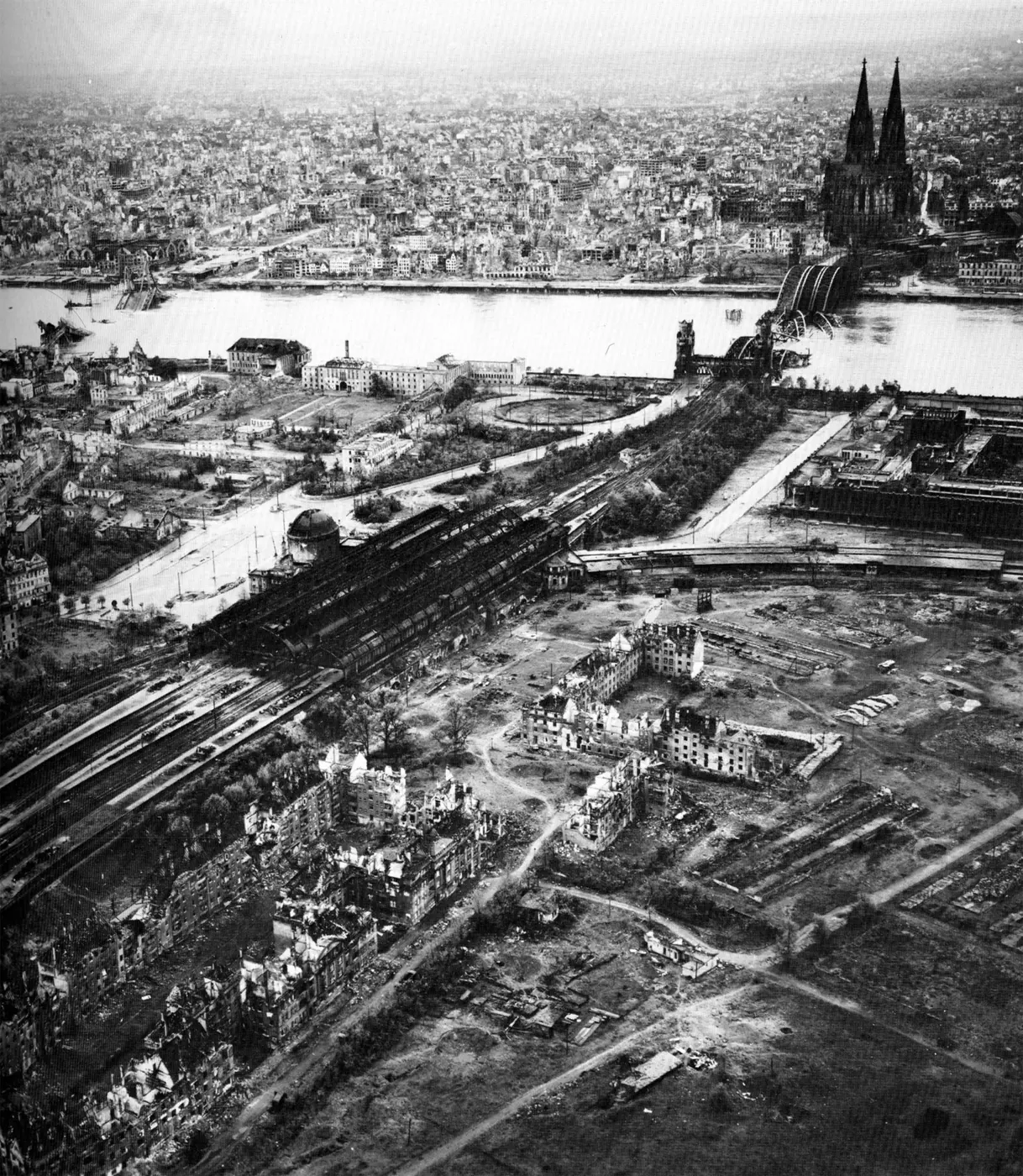
War is usually described through aims, victory and defence. Less visible is its full account: people, money, the environment, institutions and individual responsibility. This project brings those layers together without pretending that one statistic settles the argument.
USD 2,887bnworld military expenditure in 2025 · SIPRI
65state-based armed conflicts recorded in 2025 · UCDP
10%≈ USD 288.7bn · modelled amount in the comparison below
The answer without a shortcut
Would moving 10% of military spending solve global problems?
No. Roughly USD 288.7 billion would be large enough to expand several humanitarian, health, education, science and climate programmes. The comparison shows the scale of a political choice. It does not prove that money can be transferred immediately, absorbed efficiently or produce a guaranteed result.
01 / Budget comparison
What is the opportunity cost of military expenditure?
The slider compares a share of one year of world military expenditure with published budgets and financing needs. Each card states its period; annual budgets and multi-year programmes are not treated as identical.
Interactive model
Allocate USD 288.7 billion
Source amount: USD 288.7 billion. Changing one field adjusts the others proportionally so the total remains 100%.
Education
USD 57.7bn
allocated amount60 % of UNESCO's estimated annual financing gap
Health
USD 57.7bn
allocated amount2.6× of the annual target for tuberculosis funding
Science
USD 57.7bn
allocated amount6.5× of the NSF annual budget
Climate adaptation
USD 57.7bn
allocated amount17 % of the midpoint of UNEP's annual-needs estimate
Water and sanitation
USD 57.7bn
allocated amount51 % of estimated annual capital costs
The model only allocates the amount and compares orders of magnitude. It does not account for absorption capacity, political feasibility, construction time, or the fact that security spending cannot be removed unilaterally without changing risks.
i
Method note: the calculator combines annual budgets, multi-year programmes, financing needs and current investment volumes. It compares orders of magnitude; it does not claim that any selected share is immediately available. Source comparisons remain in USD.
Questions, not slogans
Six parts of the argument
Law and ethics
When can force be justified?
The strongest case for defence, and the legal and moral limits it must meet.
Read the argument Human and environmental accountWhat does a military budget omit?
Death, injury, displacement, toxic damage, reconstruction and lost investment.
Read the account Psychology and its limitsHow is obedience produced?
Authority, language, divided tasks and the contested interpretation of Milgram.
Read the analysis Oral historyWhat can personal testimony establish?
Experience can reveal mechanisms and moral conflict, but cannot establish prevalence.
Read the limits Policy and institutionsWhat can reduce the risk of war?
Defence, law, diplomacy, resilient institutions, prevention and arms control.
Read the framework Editorial standardHow are facts separated from judgement?
Primary sources, explicit uncertainty, strong counterarguments and public corrections.
Read the method02 / Defence and law
Rejecting war does not require abandoning the attacked.
Article 2(4) of the UN Charter prohibits the threat or use of force. Article 51 preserves individual and collective self-defence after an armed attack, and Chapter VII gives the Security Council powers to respond to threats to peace.
This is not a blank cheque. International humanitarian law still requires distinction, proportionality and precautions. The strongest objection to a pacifist thesis is that credible defence may deter aggression and protect people who cannot safely refuse violence.
UN Charter · Article 51UN Charter · Chapter VIIICRC · conduct of hostilities03 / Costs and impacts
War is a major cause of forced displacement, not the only one.
Persecution, mines, destroyed infrastructure, distrust and climate pressures can continue after fighting ends. Refugee numbers therefore cannot be derived from military expenditure alone.
One in every 70 people on Earth was forcibly displaced at the end of 2025.
UNHCR · Global Trends 2025people in the combined refugee category reported by UNHCR and UNRWA
UNHCRpeople internally displaced by conflict and violence
UNHCRWhat budgets cannot repair alone
Safe return also requires law, functioning institutions, housing, work and long-term trust.
Military emissions
A 2022 model estimated a 3.3–7% range, with about 5.5% as its midpoint. It is an extrapolation from incomplete data, not a global inventory.
SGR & CEOBS · 2022 estimate04 / Obedience and conscience
Responsibility can be divided. It cannot be made to disappear.
OHCHR · conscientious objection- 01Authority defines a legitimate objective
- 02Language simplifies the image of an opponent
- 03The task is divided among many roles
- 04Each person perceives a smaller personal share
- 05Checks: law, conscience and a real possibility of refusal
05 / Voices from service
Testimony reveals experience. It does not establish prevalence.
The Czech edition presents five archived accounts concerning civilian protection, conscience, refusal and the consequences of service. They can show how people understood a situation and which moral pressures they remember.
They cannot tell us how typical those experiences were. Time since the event, retrospective reconstruction, self-selection, survival and archive selection all limit generalisation. Personal testimony is therefore kept separate from experimental, legal and statistical evidence.
Oral History Association · Core PrinciplesImperial War Museums · collections06 / Prevention
UN and World Bank models estimate that one dollar invested in prevention could save up to sixteen dollars in later costs in some scenarios.
This is not a universal rate of return. It depends on the conflict, timing and institutional quality. Prevention complements the defence of people under attack; it is not a promise that every aggressor can be persuaded.
UN & World Bank · Pathways for PeaceVerified quotation · abbreviated
“Every gun that is made, every warship launched, every rocket fired signifies … a theft from those who hunger and are not fed.”
Dwight D. EisenhowerThe Chance for Peace · 16 April 1953
Archival source and context07 / Editorial standard
A strong argument is not enough. It must be checkable.
Major claims link to primary studies, official statistics or archival records. Facts, estimates, interpretations and hypotheses are labelled separately. The strongest reasonable counterargument is presented before an editorial judgement.
What is known
State the conclusion and immediately say what the evidence does not establish.
What it contests
Present the strongest reasonable objection, not a weak substitute.
Where it comes from
Link to the original record and explain what the number actually measures.
When we are wrong
Date the change, explain the reason and preserve a visible correction record.
World military expenditure reached USD 2,887bn in 2025.
A published aggregate with a defined year, currency and methodology.
SIPRI · 2025 expenditureThe figure reveals opportunity costs, not an immediately transferable fund.
Programmes differ in timing, capacity, governance and the risks they address.
Earlier prevention may reduce both violence and later public costs.
Plausible and modelled in some settings, but not guaranteed in every conflict.
08 / Support
Keep the evidence open.
Support is voluntary and never changes the editorial conclusion. The project accepts Bitcoin only; the readable destination remains bezrozkazu.cz.
Fast, low-fee payment
Bitcoin Lightning
Scan with a Lightning-compatible wallet.

Readable LNURL
lnurl1dp68gurn8ghj7ampd3kx2ar0veekzar0wd5xjtnrdakj7tnhv4kxctttdehhwm30d3h82unvwqhhg6rfwfjxsmmrddjhjdenxqemaysxSettlement on the Bitcoin network
Bitcoin on-chain
Suitable when speed is less important than direct on-chain settlement.

Readable Bitcoin address
bc1pymgvj4dydzzzlj8aklcd9wwg9wm3rdx4ykus8amhkm6vyrzc6euswk0mxp